

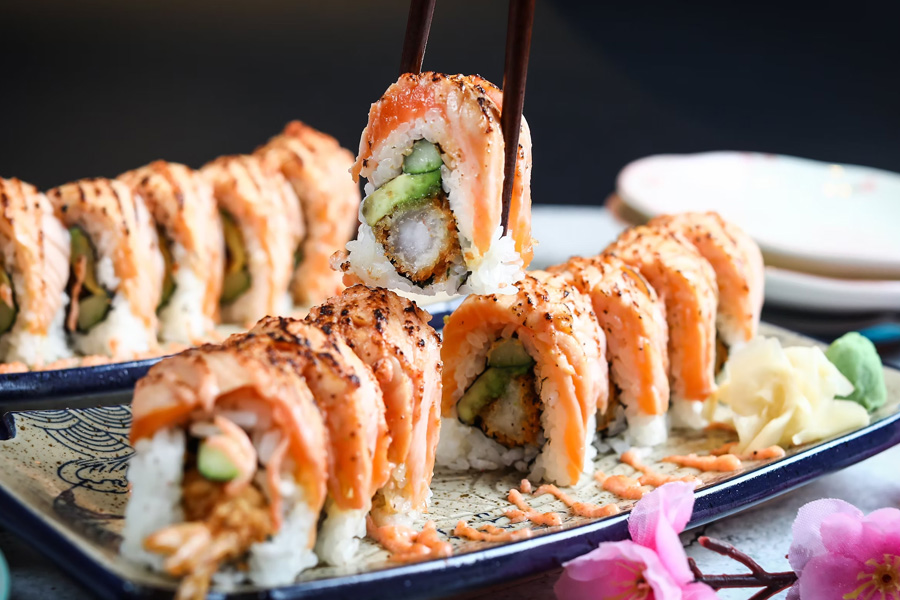
Sushi is nearly always the first dish that people think of when they think of Japanese food. Sushi has developed into a worldwide culinary sensation from its modest origins as a way to preserve fish using fermented rice. Sushi’s distinctive flavors, appearance, health advantages, cultural significance, and adaptability are the reasons people love it. Sushi is more than simply food; it is a way of life, an art form, and a representation of Japanese ideals.
Sushi dates back over a thousand years. The first version, known as narezushi, preserved fish by fermenting it with rice. When chefs started serving fresh fish with vinegared rice during the 19th-century Edo era (present-day Tokyo), the meal eventually developed into edomae sushi. This variant is very similar to modern sushi. These days, sushi restaurants can be found in almost all of the world’s major cities, including Tokyo, New York, Singapore, and London.
Food Turns into Art
Sushi’s visual attractiveness is one of its biggest draws. Japanese Food culture places a high focus on visual harmony, and sushi epitomizes this notion. Salmon roe’s vivid orange, the rich crimson of tuna, wasabi’s vibrant green, and the beautiful white of rice —all work together to produce a dish that is both aesthetically beautiful and appetizing. From knife skills to the delicate shape of nigiri, sushi chefs all over the world and in Sushi restaurant Singapore frequently dedicate years to perfecting their trade.
Variety and Versatility
Another factor contributing to sushi’s appeal is its adaptability. Everyone can find something they enjoy:
Fresh fish slices over hand-pressed rice are called nigiri.
Seaweed –
Wrapped rolls containing fish, vegetables, or other components are known as maki rolls.
Simple yet elegant raw fish slices are called sashimi.
Temaki (hand rolls) are enjoyable, casual seaweed wraps in the shape of cones.
Chirashi –
Sushi rice topped with different fish and garnishes.
From the adventurous diner who loves raw uni (sea urchin) to the cautious eater who prefers cucumber rolls, sushi caters to all tastes. The variety of vegetarian, vegan, and even fusion options—such as California rolls or hot tuna rolls—ensures that sushi can adapt to varied cultural and nutritional choices.
Another factor contributing to Singapore Sushi’s success worldwide is that it is seen as a health-conscious dining option.
Rich in Omega-3 fatty acids –
Fish like salmon and tuna are known for heart-healthy oils.
High protein, low fat –
Lean fish and seafood supply important nutrients without excessive calories.
Packed in vitamins and minerals –
Seaweed is rich in iodine, calcium, and antioxidants.
Portion control –
Sushi slices are typically tiny, encouraging thoughtful eating.
Sushi appeals to health-conscious eaters who want something tasty without feeling guilty because it provides a lighter yet satisfying meal when compared to heavier cuisines.